Story
What Makes a Neighborhood Regenerative and Where Can I Find One in Asheville?
A regenerative neighborhood brings care for the land into everyday decisions about homes, gardens, water, and shared spaces. It connects the work of restoring local ecosystems with the lives of the people who live there.
Here are some of the ways that care takes shape in a neighborhood.
Understanding Regenerative Neighborhoods
A regenerative neighborhood goes beyond basic sustainability. It actively works to restore and improve the ecological, social, and economic systems within its community. The term "regenerative" suggests a holistic approach that benefits both the environment and its residents, creating spaces that are enduring and thriving.
These neighborhoods prioritize green areas, sustainable building methods, and community involvement. This strategy supports biodiversity, lowers carbon footprints, and builds social connections among residents, leading to neighborhoods that positively impact both the planet and the people who live there.
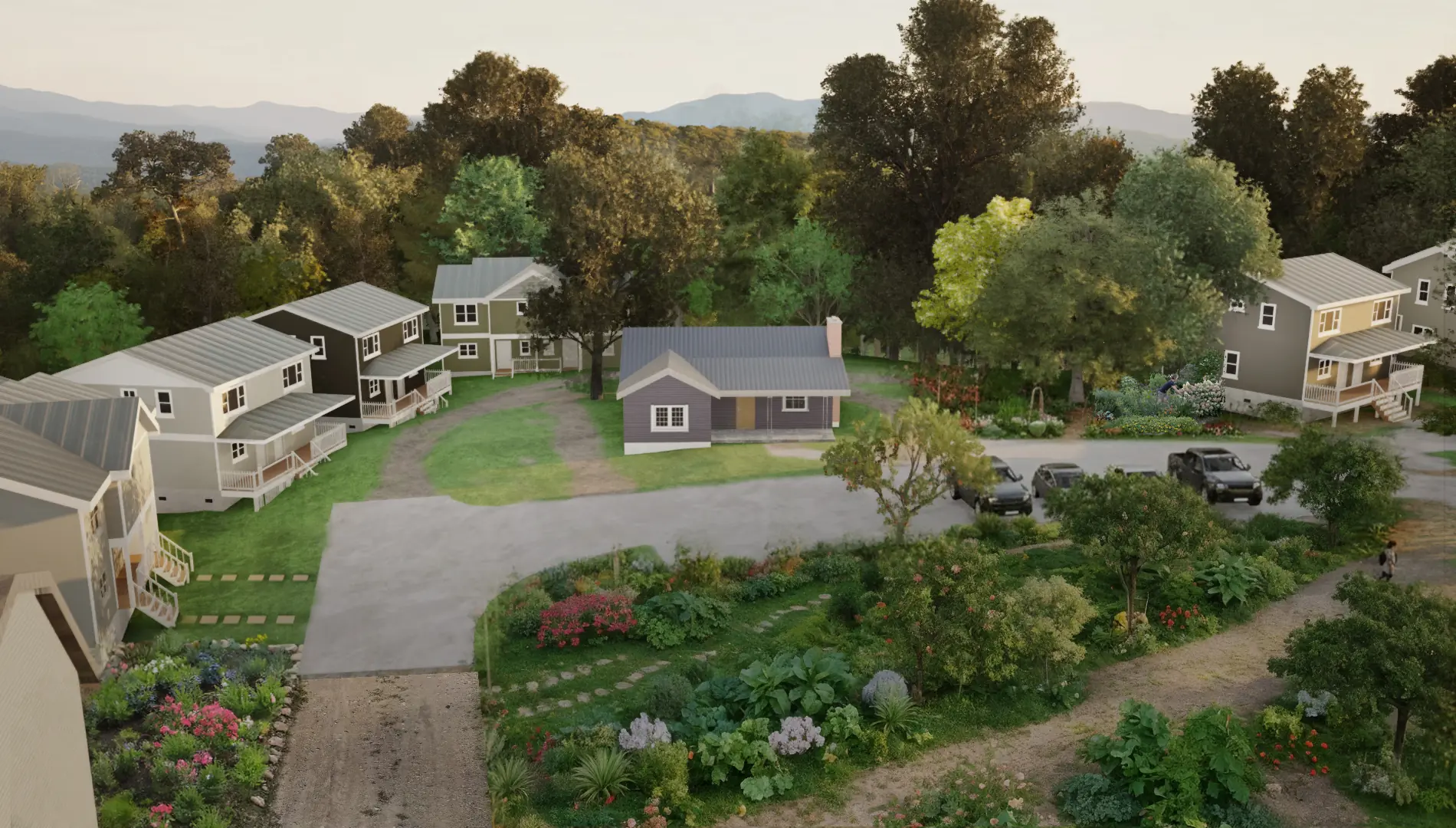
Terra Futura is a regenerative neighborhood in Asheville, NC
that is applying and exploring these principles that go beyond sustainability.
Key Characteristics of Regenerative Neighborhoods
1. Ecological Design
Ecological design uses materials and construction methods that support natural ecosystems. Green roofs, for example, can reduce stormwater runoff by up to 50%, while permeable pavements help manage water during heavy rains.
Community gardens and urban forests bring food, shade, and habitat into a neighborhood. They attract birds and pollinating insects. Recent studies show that neighborhoods with community gardens can increase resident engagement by 30% or more.
2. Community Engagement
Active participation of residents is vital in a regenerative neighborhood. Community engagement ensures that the needs and aspirations of local people shape development. Research shows that neighborhoods with high community involvement experience 50% lower crime rates and greater social cohesion.
Residents can foster a sense of belonging through workshops, local gatherings, and collaborative projects. When people unite for common goals, they build stronger social ties and increase the overall resilience of their community.
3. Economic Vitality
Regenerative neighborhoods are economically strong, promoting local businesses while ensuring opportunities for all residents. By developing spaces for local artisans and entrepreneurs, these neighborhoods encourage a circular economy where resources are used and reused within the community.
For instance, supporting local food markets can decrease reliance on outside supplies and increase employment rates for local residents. Reports suggest that shopping locally can keep three times more money in the community compared to shopping at chain stores.
4. Inclusivity and Equity
A truly regenerative neighborhood values inclusivity and equity. This means that all community members should have access to resources and opportunities. Addressing challenges like affordable housing, equitable transportation, and access to social services is essential.
Building diverse communities enhances social bonds. A study from the Urban Institute found that neighborhoods with diverse populations often demonstrate greater innovation and collaboration. Such environments draw on a wide range of perspectives, leading to creative and effective solutions to local issues.
Benefits of Regenerative Neighborhoods
Enhanced Quality of Life
Regenerative neighborhoods improve the overall quality of life by offering access to nature and community resources. Access to green spaces is linked to improved mental health and enhanced well-being. A survey by the National Recreation and Park Association found that 92% of people believe parks improve their quality of life.
A strong community network fosters social support, which increases resilience in times of crisis. For instance, communities that come together to support one another during natural disasters recover 30% faster on average.
Environmental Restoration
Ecological design supports local ecosystems and biodiversity. Urban trees, for example, can reduce heat by 5 to 10 degrees in neighborhoods.
By improving local ecosystems, these neighborhoods can make a tangible difference in the health of the environment.
Economic Resilience
Regenerative neighborhoods strengthen local economies by supporting small businesses and generating jobs. They become less susceptible to external economic pressures. A community that prioritizes local production can create a self-sustaining economic model, revitalizing neighborhoods and benefitting all residents.
Local economies that are supported in this way often experience 20% growth in job opportunities over a five-year period, providing vital stability for families.
A Path Toward Regenerative Neighborhoods In Asheville
Regenerative neighborhoods represent a holistic approach to community development. By promoting ecological health, social connection, and economic strength, they offer a viable way forward for sustainable urban living.
Residents take part through shared projects, local decisions, and care for the land. Gardens, gathering places, and stormwater systems give that work a practical shape.
A regenerative neighborhood grows through shared work and attention to the place itself: its soil, water, plants, homes, and people.
These principles guide our work at Terra Futura. Explore the homes here: (www.terrafuturafarm.com/availability)